INFORMATION LETTER
INTERNATIONAL UNIVERSITY OF TOURISM AND ENTREPRENEURSHIP OF TAJIKISTAN
RESEARCH INSTITUTE FOR SUSTAINABLE DEVELOPMENT AND GREEN ECONOMY
INFORMATION LETTER
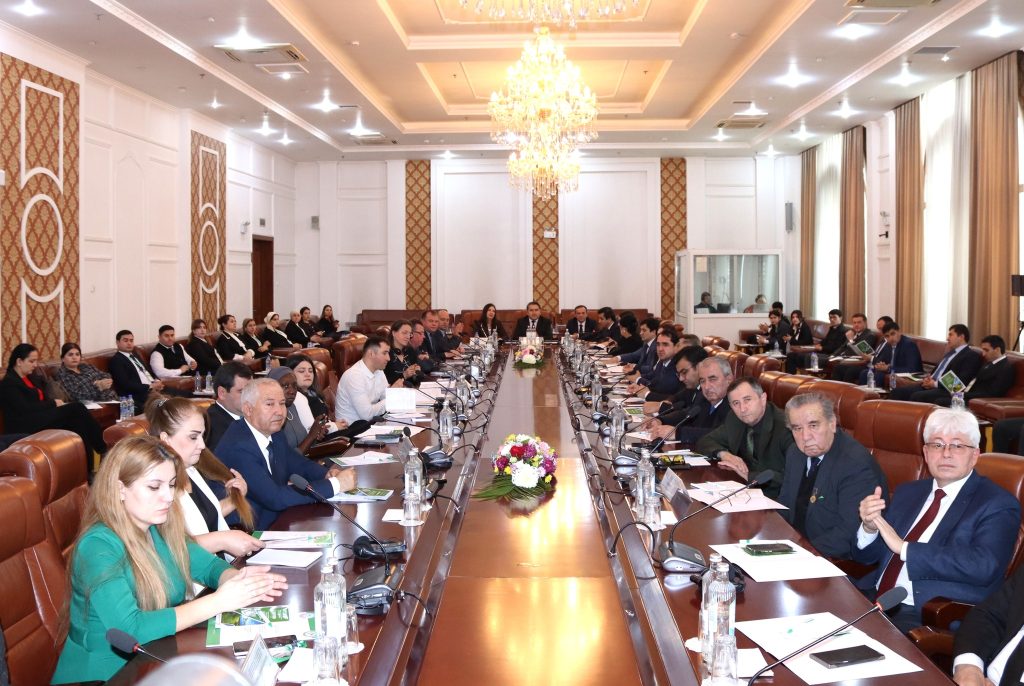
The Research Institute for Sustainable Development and Green Economy of the International University of Tourism and Entrepreneurship of Tajikistan will hold an international scientific and practical conference with the participation of national and international experts on 17 February 2026 on the topic: “Current Issues of the Transition to a Green Economy in Central Asia.”
The conference will be attended by representatives of ministries and organizations (environmental protection, economic development and trade, energy, water resources, agriculture, transport and finance), regional institutions of Central Asia and sectoral organizations, international organizations (UN agencies, international financial institutions, development banks and donors), academic experts and representatives of analytical centers (research institutes and universities), the private sector (banks, renewable energy developers, agribusiness, waste/industrial sectors and ESG consultants), as well as civil society, youth and women’s initiatives, and media representatives.
The conference will address the following topics:
1. CLIMATE CHANGE: PATHWAYS TO RESILIENCE AND ADAPTATION
– assessing the impact of climate change on ecosystems and biodiversity;
– studying the impact of climate change on natural resources (water, soil, forests, glaciers);
– analyzing the impact of climate change on socio-economic sectors (agriculture, energy, healthcare);
– examining institutional and international cooperation in addressing climate, water and food challenges;
– reviewing national and regional experience in sustainable development in the context of climate change;
– governance of “green” sectors and support for renewable energy producers.
2. GOVERNANCE AND IMPROVEMENT OF STATE POLICY IN THE FIELD OF THE “GREEN ECONOMY”
– analyzing the public governance system and institutional coordination for the green economy agenda;
– assessing the effectiveness of state policy and national programs for green economy development;
– studying economic and financial mechanisms to support the green economy (taxes, subsidies, investments);
– examining the role of legislation and legal reforms in green economy development;
– analyzing cooperation between the state, private sector and civil society in implementing green economy policy;
– attracting investments and innovations to reduce waste and increase production efficiency;
– studying the impact of circular economy policy on sustainable development and employment;
– state programs and strategies for developing energy-efficient technologies and renewable energy;
– ensuring coordination between the state, private sector and universities in science and innovation;
– assessing and analyzing the results of the transition to green industry and its impact on the circular economy.
3. NATURAL RESOURCES, SUSTAINABLE AGRICULTURE, AND FOOD SECURITY
– studying the efficient use of natural resources in agriculture and its impact on food security;
– analyzing investment strategies for developing natural resources, ecosystems and agriculture;
– studying the role of innovative technologies in processing, production and use of natural resources;
– digitalization and monitoring of natural resources using artificial intelligence platforms;
– assessing prospects and adaptation strategies for the agricultural sector to climate change;
– studying the use of alternative renewable energy sources;
– studying the impact of sustainable management on employment growth and reduction of social inequality;
– assessing cooperation between the state, private sector and civil society in managing water, land and energy resources;
– studying prospects and strategies for sustainable development using investments, innovation and digital technologies.
Requirements for Papers Submitted for Publication
Submitted manuscripts must be edited and comply with the following requirements:
– page format: a4; margins: right – 3 cm, left – 1.5 cm, top and bottom – 2 cm.
– font: Times new roman / Times new roman tj, size 14.
– first line: paper title in capital letters, centered.
– second line: author’s surname, initials (first name and patronymic), academic degree, academic title, place of work (study); the city and region are indicated in parentheses; centered.
– third line: main text typed in ms word; line spacing – 1.5; justified alignment; no hyphenation.
– length: not less than 5 pages, including formulas, figures, tables, references, abstract and keywords (formulas must be created using the “equation” editor).
– references: placed at the end after the word “references” and arranged in alphabetical order.
– citations are mandatory and should be formatted as [3, 25], where the first number is the source number in the reference list and the second is the page number.
– after the reference list, provide the paper title, abstract and keywords in tajik and russian (font size 14).
– at the end, provide author information: full surname, first name and patronymic, academic degree, academic title, position (study), phone number and e-mail; justified alignment; font size 14 (in tajik and russian).
All conference papers recommended for publication as an article must include an abstract and keywords in Tajik and Russian.
The participation application and the full text of the paper must be submitted to the organizing committee by 10 February 2026.
Article metadata and abstracts will be published in RSCI (Russian Science Citation Index).
Conference languages: Tajik, Russian and English.
The organizing committee reserves the right to carry out technical editing and may return papers that do not match the stated theme or are prepared without соблюдение the established technical requirements.
Contact Information
Address: 734055, Republic of Tajikistan, Dushanbe, Borbad Avenue 48/5, Research Institute for Sustainable Development and Green Economy, International University of Tourism and Entrepreneurship of Tajikistan.
Responsible person: Umedjon Majidi
✆ (+992) 886 88 50 00
✉ majidiu@gmail.com