INTERNATIONAL SCIENTIFIC AND PRACTICAL FORUM ON “SUSTAINABLE DEVELOPMENT OF TOURISM, ENTREPRENEURSHIP, AND THE GREEN ECONOMY”
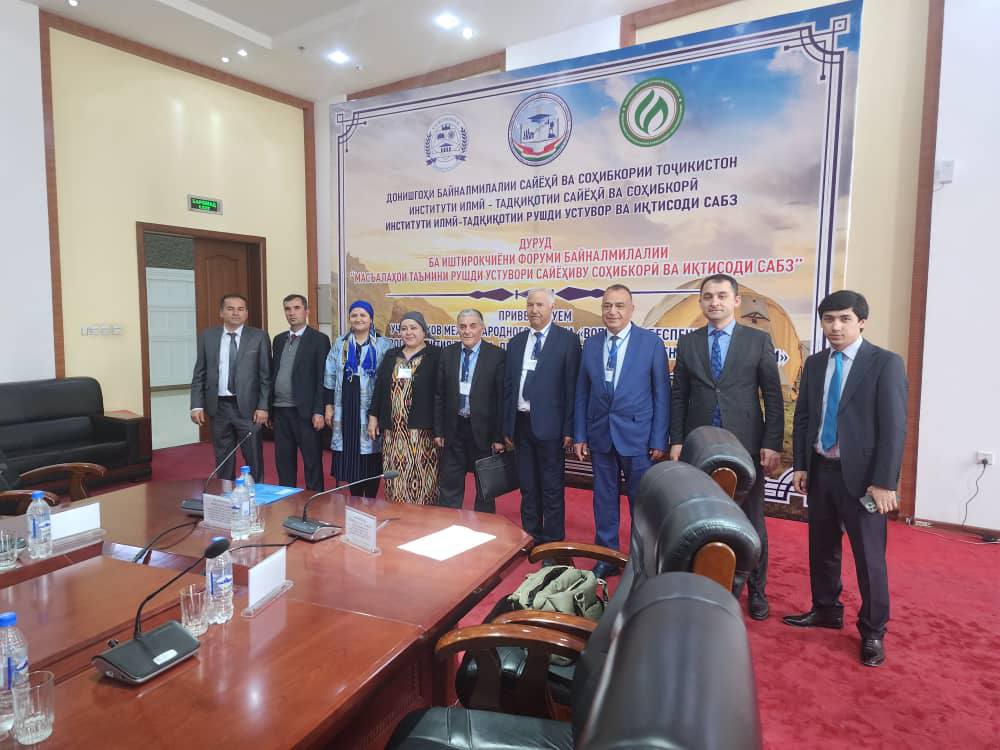
On 4th of April 2025 the National library of Tajikistan hosted an International scientific and practical forum organized jointly by the State Committee on investments and State property management of the Republic of Tajikistan and the tourism development committee under the Government of the Republic of Tajikistan on the topic of “SUSTAINABLE DEVELOPMENT OF TOURISM, ENTREPRENEURSHIP AND THE GREEN ECONOMY.” Representatives of ministries and agencies, scientists, and specialists in the field from both Tajikistan and abroad participated in the forum.
The purpose of the International scientific and practical forum is to share results and develop scientific ideas based on the experience of developed countries, as well as to create a mechanism for ensuring the sustainable development of tourism, entrepreneurship, and the green economy. The forum provided a platform for discussing current issues related to ensuring the sustainable development of tourism, entrepreneurship, and the green economy in Tajikistan.
In addition to the participation of domestic scientists and specialists, speakers from the Islamic Republic of Iran, the Russian Federation, Germany, and Uzbekistan presented their ideas and proposals for developing the tourism sector, contributing to the further development of regional tourism, including the implementation of tourism infrastructure.
The following scientifically based recommendations of scientific and practical significance were presented during the presentations and reports:
- Developing solutions to ensure sustainable tourism development in the country through scientific events;
- Strengthening the implementation of the strategy for ensuring the sustainable development of entrepreneurship and the green economy through the implementation of scientific research results
- Improving the sustainable development of ethnotourism, medical, and sports tourism through the development of grant programs and projects;
- Developing regulatory mechanisms to ensure the sustainable development of entrepreneurship and a green economy by establishing a governance system in coordination with relevant agencies and departments;
- Enhanced representation of the Republic of Tajikistan in achieving the UN Millennium Development Goals through the sustainable development of a green economy;
- Taking a strong position in the revival of the Silk Road to ensure the sustainable development of international tourism;
- Training specialists through internships to identify the multiplier relationship between the sustainable development of entrepreneurship and the national economy;
- Demonstrating, through scientific and public events, solutions to ensure the mutually sustainable development of ecotourism, green entrepreneurship, and a green economy;
- Developing and presenting high-quality models for ensuring the sustainable development of tourism and entrepreneurship in the Republic of Tajikistan;
- Enhancement of foreign experience in improving the sustainable development of entrepreneurship and a green economy through the media;
- Widespread use of sustainable regional green economy development principles in international integration.
- Improving the structure of macroeconomic indicators using the experience of domestic and foreign tourism companies;
- Participating in expanding the share of tourism and green entrepreneurship in the state budget by providing scientifically sound recommendations;
- Determining the extent and level of development of active domestic tourism companies and mobilizing their experience to enhance the role of tourism entrepreneurship and the green economy in addressing the country’s social problems;
- Through the development and presentation of a project, widely utilizing rural tourism experience in the sustainable development of tourism and entrepreneurship, as well as in the development of domestic tourism;
- Widespread use of tourism infrastructure to introduce new technologies into tourism services through the use of artificial intelligence platforms;
- Finding a mechanism for assessing climate threats and developing prospects for expanding tourism entrepreneurship in supporting a green economy;
- Effectively strengthening interregional tourism based on international and domestic tourism experience;
- Development of the tourism economy by raising awareness of tourism entrepreneurship;
- The impact of transport infrastructure development on strengthening sustainable tourism, entrepreneurship, and the green economy;
- Domestic tourism facilities should be comprehensively researched and assessed from a scientific perspective;
- Monitor tourist facilities and propose ways to address deficiencies in this area;
- Develop a rural tourism development program;
- Study the potential of medical tourism and include it in a unified inventory of the country’s medical tourism potential;
- Conduct a scientific assessment of tourist facilities in the country’s regions through projects;
- Develop new methodological methods for statistical accounting of domestic tourism;
- Develop various mechanisms for organizing national tourist complexes in remote regions of the country;
- Compile a tourism encyclopedia of Tajikistan through a project indicating the potential, industry scientists, regulatory documents, various individuals, etc.;
- Conduct scientifically based tourism marketing, collaborate with experienced marketing companies from countries leading in the tourism sector;
- Pay special attention to organizing bilateral tourism with the Republic of Uzbekistan, especially with the ancient cities of Samarkand, Bukhara, and Kukand;
- Using the open door policy strategy, focus on the development of villages, folk crafts, and tourism, and establish exchanges of experience with cities around the world that are sister cities of Dushanbe and Panjakent, Khujand and Kulob, Bokhtar and Tursunzoda;
- Explore and utilize the advantages and proven tourism services of the region, and ensure socio-economic benefits for the country and the population through tourism development;
- To develop and improve health tourism in all regions of the republic, it is necessary to develop various measures to restore and improve sanatoriums. To this end, the state must allocate funds to improve the conditions of sanatoriums and bring them into line with international standards;
- If Garmchasma, Avja, and Jelondi are properly utilized, measures should be taken to establish permanent sanatoriums operating year-round, such as the Khojaobigarm sanatorium in the Varzob district, which will contribute to the development of domestic tourism in the country;
- The healing springs upstream of the Panj River remain underutilized, so it is necessary to promote the development of their infrastructure;
- Develop a draft resolution of the Government of the Republic on the organization and development of ethnotourism settlements and regulations on granting the status of an ethnotourism settlement in Tajikistan with certain privileges and subsidies;
- Develop international grant projects to study best international practices in the development of ethnotourism settlements and their implementation in Tajikistan;
- To train personnel in the field of ethnic tourism, it is advisable to introduce a special course on “Ethnic Tourism” in the State Education Service of the Republic of Tajikistan;
- It is recommended to conduct a dissertation study on the organizational and economic mechanism for the formation and development of ethnotourism settlements (using the Republic of Tajikistan as an example);
- For the development of a green economy, cooperation between the public and private sectors in the implementation of new and innovative projects in the fields of energy and clean technologies is important;
- Education and training in green industries are necessary to prepare qualified specialists and raise public awareness of the importance of sustainable development;
- To accelerate the green transition in mobile communications in Tajikistan, it is necessary to strengthen government regulation and international cooperation;
- Create a cultural and creative quarter – a territorially defined zone facilitating the development of small businesses (art studios and other types of workshops, art exhibitions, etc.).
- Attracting foreign and domestic capital, organize as many investment projects as possible to develop folk crafts industries in the mountainous regions of the country;
- Organize appropriate centers for the production of folk crafts and armugans in city centers and attract foreign tourists to the production activities of such centers;
- Organize a handicraft market in city centers where only affordable handicraft materials will be sold. Currently, handicrafts are sold in all markets across the country. However, it would be more practical to unite all artisans in a single market;
- Organize and improve business infrastructure institutions, including Islamic banking;
- Provide long-term support to priority entrepreneurial projects from commercial banks;
- Organize a modern information infrastructure for research and development and entrepreneurship;
- Reduce the income tax on entrepreneurs and include its amount in the rent tax on natural resources.
- Adapt all statistical data collections to current conditions and changes in the economic structure, especially data collections on industry, construction, regions of Tajikistan, entrepreneurship in Tajikistan, etc. Study the experience of compiling statistical data collections in foreign countries, especially the Republic of Belarus;
- Clarify in the Tax Code the intended use of the depreciation fund and use the funds provided for expansion and reproduction;
- Simplify company liquidation procedures and prevent tax authorities from interfering with the activities of entrepreneurs;
- Place the activities of tax authorities under strict control and, in the event of deficiencies, provide an objective assessment;
- Establish a high level of activity for business associations, analyze and study their work, and improve methods for retraining entrepreneurs;
- Attract successful entrepreneurs to higher education institutions as teachers and train students in the intricacies of mutually beneficial cooperation.